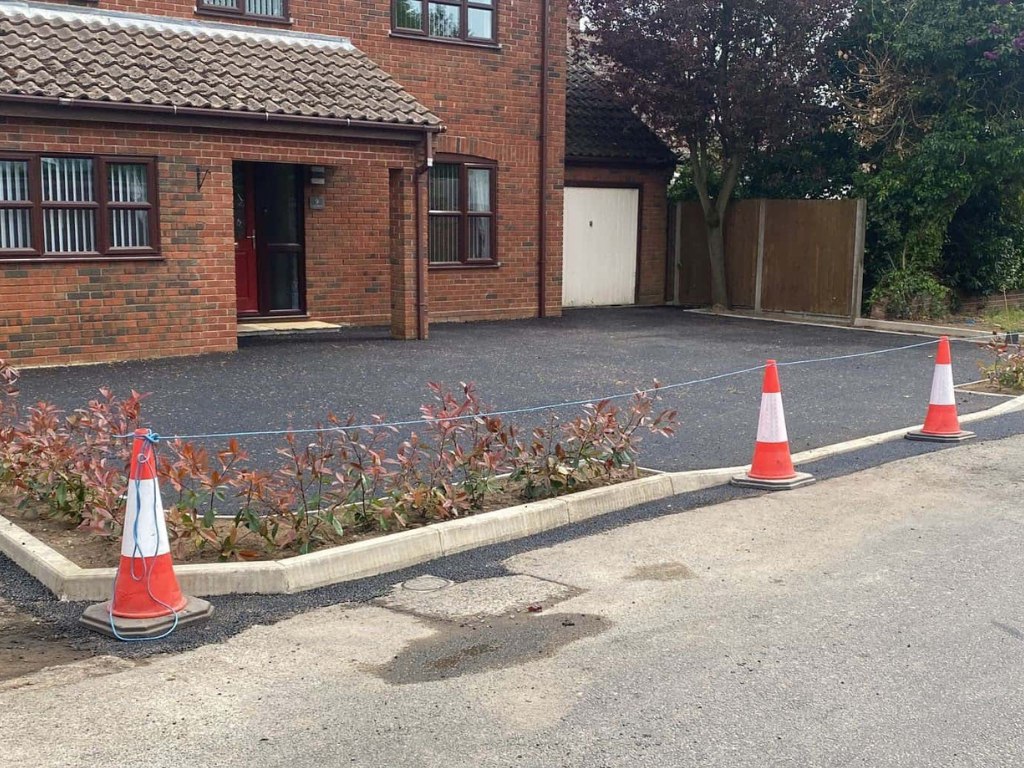
Is Tarmac Suitable for a Path Leading From the Driveway to the Garden?
A garden path may seem like a relatively small part of an outdoor space, but its surface can have a significant effect on how easily the garden is accessed and how well the driveway connects with the rest of the property. Where a path begins at the driveway and continues towards a rear or side garden, choosing a practical and durable surface is particularly important.
Tarmac can be an excellent option for this type of pathway. When correctly prepared and installed, it creates a firm, continuous surface that is suitable for regular pedestrian use and can provide a neat transition between a driveway and garden.
For homeowners in Bromham, Bedfordshire, the suitability of tarmac will depend on factors such as the path’s width, ground conditions, drainage, surrounding landscaping and how the route will be used.
Why Can Tarmac Work Well for a Driveway-to-Garden Path?
Tarmac is widely valued for creating durable outdoor surfaces. Although commonly associated with driveways, its characteristics can also make it well suited to paths around residential properties.
Advantages of a properly constructed tarmac path include:
- A smooth, continuous walking surface
- Good durability for regular pedestrian traffic
- Clear definition between lawns, beds and other garden areas
- Straightforward integration with a tarmac driveway
- Suitability for straight and gently curved routes
- A practical surface for moving bins and garden equipment
- A neat and consistent appearance
- Relatively straightforward ongoing maintenance
The quality of the finished path, however, depends on more than the tarmac itself. Preparation beneath the surface, edge support and drainage are equally important.
Creating a Natural Continuation From the Driveway
One of the main advantages of using tarmac for a path connected to a driveway is visual continuity.
Where the driveway is already surfaced in tarmac, continuing the material along a side access or towards the garden can create a more unified appearance. Instead of the driveway ending abruptly before a completely different path begins, the surfaces can feel like parts of the same overall layout.
This can be particularly effective where the pathway is clearly visible from the front of the property.
The design does not necessarily need to make the path look identical to the driveway. Edging and surrounding landscaping can distinguish the pedestrian route while retaining a consistent surface.
Tarmac Provides a Firm Walking Surface
Garden access routes are used in many different conditions throughout the year.
A poorly defined route across soil or grass can become less convenient during wet periods, while loose materials may shift under regular foot traffic.
Tarmac provides a firm surface that does not rely on individual paving units or loose aggregate for its finished walking area.
When installed with appropriate falls and a properly prepared base, it can create a practical route between the driveway and garden that remains clearly defined throughout the year.
It Can Make Everyday Garden Access Easier
A path connecting the driveway and garden often has a practical role beyond ordinary foot traffic.
Homeowners may use it when moving wheelie bins, wheelbarrows, lawn equipment, garden tools or other items between different parts of the property.
A continuous tarmac surface can make this movement easier because there are no individual paving joints or loose stones across the main walking route.
When planning the path, its likely everyday uses should therefore be considered alongside its appearance. Suitable width and a sensible route can make a considerable difference to how useful the finished pathway becomes.
The Foundation Is Just as Important as the Surface
Tarmac should not simply be laid over unprepared ground.
Like a driveway, a garden path relies on the stability of the construction beneath its visible surface. The existing ground needs to be prepared appropriately before suitable supporting layers are installed and compacted.
This helps create a stable foundation for the finished tarmac.
Insufficient preparation can allow movement or settlement to develop later, potentially creating depressions, cracking or uneven sections.
A professionally constructed pathway therefore considers the complete build-up rather than treating tarmac as a surface covering alone.
Why Path Edges Need Proper Support
Because garden paths are relatively narrow, their edges make up a significant part of the overall construction.
Appropriate edge restraint helps maintain the shape of the pathway and supports the tarmac along its boundaries.
Without suitable support, vulnerable edges can gradually deteriorate, particularly where they meet lawns, planting areas or frequently used sections of garden.
Edging can also contribute to the appearance of the path by creating a clear boundary between the tarmac and surrounding landscaping.
Drainage Should Be Planned From the Beginning
Rainwater needs somewhere suitable to go when it reaches a hard surface.
A properly designed path should therefore incorporate appropriate falls so that water does not simply collect in low points. The surrounding ground, existing driveway and garden layout all influence how drainage should be approached.
This is particularly important where the pathway runs alongside a property or between boundaries.
Planning levels before installation allows the path to manage rainfall as part of its design rather than trying to correct standing-water problems after the surface has been completed.
Can Tarmac Be Used for Curved Garden Paths?
Tarmac is not restricted to completely straight routes.
It can be installed along gently curved paths, making it useful where the most practical route towards the garden does not follow a straight line.
Curves can also help a path integrate naturally with lawns, planting beds and other landscaping.
The design should still prioritise usability. Excessively tight bends may make it more difficult to move bins or garden equipment, so the path’s shape should reflect how it will actually be used.
How Wide Should a Tarmac Garden Path Be?
There is no single path width that suits every property.
The appropriate width depends on available space and the route’s intended purpose. A path used mainly for walking may have different requirements from one regularly used for moving wheelie bins, wheelbarrows or garden equipment.
Narrow side access can also influence what is practical.
Planning the width before construction helps avoid creating a path that looks suitable but proves awkward in everyday use.
Can Tarmac Work Alongside Other Landscaping Materials?
A tarmac pathway does not mean every surrounding surface needs to use the same material.
It can sit alongside lawns, planted borders, patios and other landscaping features. Appropriate edging can create a clear transition between the path and neighbouring surfaces.
This allows the pathway to perform its practical role without dominating the garden design.
A well-planned layout considers how the path relates to everything around it rather than viewing it as an isolated strip of surfacing.
Is Tarmac Suitable for a Sloping Path?
Tarmac can be suitable for paths with changes in level, although the slope and surrounding conditions need to be assessed properly.
Gradients influence both ease of use and the way rainwater travels across the surface. A path that directs large amounts of water towards one low point can develop drainage problems even if the tarmac itself remains in good condition.
The route, levels and falls should therefore be considered together.
Where ground levels vary considerably, careful preparation becomes particularly important for creating a practical finished surface.
Tarmac Can Help Define Side Access
The space between a property and its boundary can sometimes become an overlooked part of the garden.
Where it forms the main route between the driveway and rear garden, creating a defined path can make this area considerably more practical.
A tarmac surface provides a clear distinction between the access route and surrounding soil, planting or other surfaces. It can also make the area feel more organised and purposeful.
This is useful where side access is used frequently rather than simply serving as an occasional route into the garden.
What If the Existing Driveway Uses a Different Material?
Tarmac can still be considered even when the existing driveway is surfaced with another material.
The important factor is how the transition between the two surfaces is designed.
A clearly defined junction can make the change in material appear intentional rather than unfinished. Edging can also help separate different surfaces and create a more structured appearance.
The wider driveway and garden design should guide the choice rather than assuming that every connected surface must be identical.
Why the Route of the Path Matters
The most direct path is not always automatically the best route.
Existing garden features, gates, boundaries, drainage and changes in ground level can all affect where a pathway should run.
A well-positioned path should provide convenient access without unnecessarily reducing lawn or planting space.
Thinking about how people naturally move between the driveway and garden before construction begins can result in a path that feels like an integral part of the property rather than an addition fitted around existing features.
Can Tarmac Provide a Low-Maintenance Pathway?
A properly installed tarmac path can provide a relatively straightforward surface to look after.
Because the main surface is continuous, there are fewer individual joints than with some forms of paving. Regular sweeping and general care can help keep the route clear of debris.
Long-term performance still depends on good initial construction.
Stable foundations, supported edges and effective drainage are what allow the finished surface to perform properly. Choosing tarmac without considering these underlying elements can compromise the advantages the material would otherwise provide.
Why Professional Installation Makes a Difference
A successful tarmac pathway depends on careful preparation and installation.
Ground conditions need to be assessed, suitable supporting layers prepared and levels established before the finished surface is laid. The edges and connection with the driveway also need to be considered as part of the overall construction.
At Bromham Driveways & Patios, we look at how the pathway will be used and how it relates to the existing driveway and garden before determining the appropriate approach.
For properties in Bromham, Bedfordshire, this helps create a path that is not only visually tidy but practical for regular use.
Conclusion
Tarmac can be an excellent choice for a path leading from a driveway to the garden. It provides a firm, continuous surface that can work particularly well for regular foot traffic and for moving bins, wheelbarrows and garden equipment around the property.
Its long-term performance depends on more than the finished surface. Correct ground preparation, suitable edge support, sensible path dimensions and effective drainage all contribute to a successful installation.
If you are considering a new tarmac path for your property in Bromham, Bedfordshire, contact Bromham Driveways & Patios. We can assess the proposed route and surrounding ground and recommend a suitable approach that connects your driveway and garden in a practical, well-planned way.
Call us on: 01234 676 698
Click here to find out more about Bromham Driveways & Patios
Click here to complete our contact form and see how we can help with your driveway needs.